Queer History
Course description. This course will cover the history of queer people, mostly in the U.S., from the mid-19th century to the present.
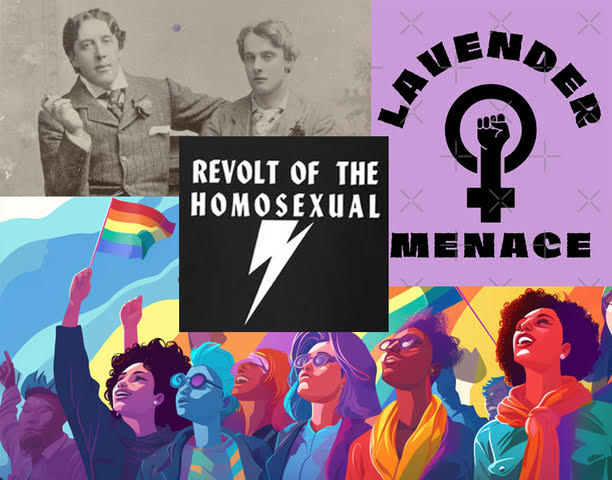
The course will begin with an overview and then discuss terminology and methodology—how queer history is documented. We will the look at 19th century lesbians and gay men, the significance of World War One for the queer community, the gay Harlem Renaissance, the literary scene, and Weimar Germany and Magnus Hirschfeld. We will spend time on Nazis and homosexuality, police actions, and queers in the military. We will then discuss the early modern movement: McCarthyism and the Lavendar Menace, Mattachine and DOB. We will spend time discussing Stonewall and the modern queer rights movement it engendered, as well as important figures like Pauli Murray. We will cover the AIDS epidemic and its aftermath, and look at recent developments, both progressive and regressive.
We expect students to contribute and participate in discussion based on their own history. We have all had a role in creating our history, and we want to hear about your activities, as basic as coming out experiences.
Required materials. There is no textbook, but we will send out occasional articles and other readings several days in advance of the class to which it pertains.
Prep for first class. No advance reading, but people should reflect on their own history as queer people (or queer adjacent).
Instructors
Martin Kabakoff
Priscilla Golding
Contact us
- Rainbow Registrar
- ra••••n@gma••••l.com
Location
Classifications
Categories
- Session II